top of page

The Full Story
WHY PUPPETRY?
Practical puppetry and animatronics give actors something real to connect with and audiences something real to believe in. It’s storytelling you can touch.

Human Touch
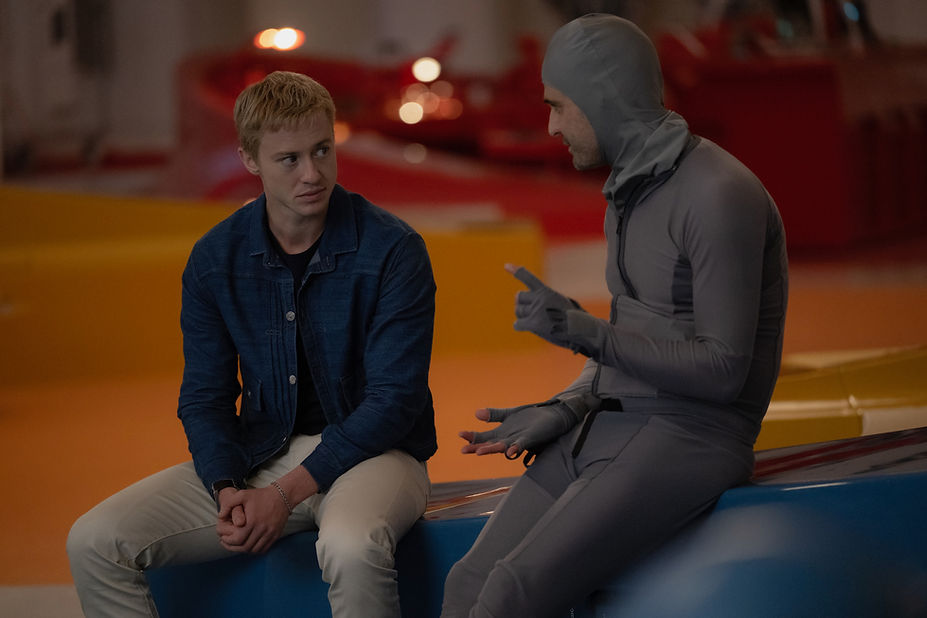
Puppetry brings a real, physical presence to set. When something truly exists in the space, performances become more honest and alive. The puppeteer makes moment-to-moment choices, just like any actor would, responding to their scene partners and the emotion/stakes. The puppet’s physicality, timing, and intention all come from the puppeteer’s acting instincts, bringing a truly believable character to the screen that's not-quite-perfect, and more perfect because of it.

For Actors
We create beautifully immersive environments for our actors to perform in but all too often expect them to 'imagine' the character they're talking to. With puppets you get a real living, breathing character to perform with who responds to you, feeds the energy of the scene and sometimes throws something unexpected and magic into the mix. Producers, directors and editors tell me that 95% of the time they end up using the takes where the actor is performing with the puppet as their performance is just better.


For Directors
Directors can adjust performances on the spot, tweaking timing, movement and exploring character in real-time. This eliminates the guesswork in framing, lighting, and blocking that can come with post-production effects. Many directors prefer this approach as it mirrors how they direct their actors.
Timeless Quality
Practical effects age beautifully and have a physical presence that doesn’t feel dated. Directors and producers know that future audiences will experience the same tactile, immersive quality that makes the original performance magical.


For VFX
Physical creatures give VFX supervisors accurate lighting, shadows, reflections and interactions with the environment. Actors eyelines are correct, camera has framed properly for the character and the blocking reflects what the character could realistically do. Puppetry can also be useful as performance reference that can be augmented or animated later. The subtle imperfections from a puppet’s movement, micro-adjustments, timing variations, and organic motion, are hard to replicate digitally. VFX artists can use these natural quirks to create richer, more lifelike digital enhancements.
Reduced Cost
Every shot fully CGI requires modelling, rigging, texturing, animating, lighting, and rendering. A practical puppet provides a real, on-set reference, so VFX only needs enhancements, not full creation from scratch. Puppets interact with actors in real time, so multiple takes can be done quickly without relying on placeholder objects or imagining eyelines. Directors and actors get it right on the first few takes, reducing shoot days and costly reshoots. A physical puppet can be adjusted on-set instantly, avoiding weeks of post-production fixes. Puppets and animatronics can be reused across scenes, episodes, or even productions. Puppets reduce the need for elaborate tech setups, keeping the shoot simpler and cheaper.


Legacy
Puppetry has evolved from ancient storytelling to cutting-edge film technology. It’s one of the oldest and most adaptive art forms in the world. Some of cinema’s most beloved moments were achieved through puppetry and animatronics and their influence runs deep in film history. It's a great way to get audience talking about the project through BTS for years to come.
Audience Experience
Audiences may not know why a creature feels more believable, but they instinctively sense when something physically exists. Practical effects anchor fantastical worlds in a physical reality, helping audiences suspend disbelief and feel part of the story.
bottom of page